Female and Want to Publish? Get a Grip

Almost three quarters male writers at the Atlantic

It is the best of times and the worst of times—if you are a woman writer, that is. More women than ever are embracing the writing life. More women then men take part in writing workshops, writing conferences and informal writing groups. They are producing a substantial number of words and are finding print or online venues to publish their work. However here’s the sad fact: Few women writers appear to be taken seriously where it may count. According to a recent study by VIDA, the new organization that evaluates the critical and cultural conversations on writing by women, the most prominent magazines in literary art show a stark lack of articles, essays or fiction written by women:

http://vidaweb.org/the-count-2010

Harper's numbers are worse.

The pie charts in the Vida study are an overwhelming shade of red, the color denoting work by men the magazines have published or books by men the magazines have reviewed.

In a good many cases we’re looking at over 70 percent male, even 80 percent male in some of the most established and respected purveyors of literary art. Poetry is the only area where there appears to be some equity.

What do to about this? I suppose women could say who cares and make a blood pact to read only other women. They would still be well read–exceptionally well read. (My bedside table is loaded with books by women I long to have time to read. Seriously, who has time for men?)

But how in the 21st century was this happening right under our noses? These results are a surprise, unless of course you are a woman trying to publish. A number of writers and editors are chewing over those numbers and offer reasons for this striking inbalance:

Ruth Franklin at the New Republic owns up to her own low numbers.

Jessica Crispin on NPR goes to editors for more answers

Laura Miller at the NY Times says men don’t care

Rob Spillman Editor of Tin House says he does in fact care

Annie Finch says here’s how magazines can do better

The Southern Review says they are doing better and show their own numbers

Katha Pollit at Slate says more women editors would be the best start

Eileen Myles cuts to the quick of it, as only a poet can

I buy a New Yorker subscription every year. I devote precious time I don't have to reading it. And, yes, I've long noted the lack of women.

I’ll summarize their assertions and other critics on the dismal numbers in “the count” as follows:

Women don’t submit as much work to magazines as men. Magazines edited by men seem to publish more men. Women write about love, family and domestic issues. (And men write about only war and baseball? Come on.) Agents submit to those magazines more work by men. Women don’t have time to produce longer work, so thus the prevalence of women publishing in poetry. Men do better with rejection. Once slapped down by an editor, a man will pop another piece in the mail to him (usually a him) and say, “Go ahead. Hit me with your best shot.” Women, not so much. We’re perfectionists, too, which may make us actually better writers. (Thank you to the male respondent who made that conjecture.)

A scan of the last few issues of Silk Road Review, the literary magazine I edit, supports the assertion that smaller magazines do much better on gender equity. We have a female nonfiction editor at Silk Road, and two thirds of the nonfiction in our recent issues was written by women. So maybe women editors, as Katha Pollit says, make the difference. We have a senior male poetry editor and over 50 percent of the poetry we publish is written by women. Maybe it is true that in the world of poetry women enjoy equal footing? Fiction in our issues usually breaks about even in gender, and again we have a senior male editor. I don’t know how to interpret those particular numbers, although I will note fiction seems to generate the more difficult discussions regarding what we will accept. How gender might or might not figure into those assessments I don’t know. I’ll start paying more attention. We don’t publish book reviews, so we’re off the hook here. We also don’t pay, and the editor in chief is a woman (me)—one sensitive to these matters because she (me) is also a writer. Could it be that money (and all the top magazines pay) and male editors are the unfortunate formula more likely to shut out women?

Get a Grip

We can do it. Get tough.

Here’s what I conclude, and long before the dust on this subject will settle: If you are a woman writer, it’s time to get a grip: Unless you have two lives to live—because it may take twice as long for you to get where a male writer does–then face facts and put the pedal to the metal, or at the least in your spine. (It is the Chinese year of the Rabbit or specifically the Metal Rabbit, so take it as a sign. The timid are going to get tough.)

I offer you these successful female writers who I have followed this last year and had the opportunity to see in action as they teach and/or explain their art. Each one has given me valuable advice:

Ann Hood.
Bonnie Jo Campbell.
Naseem Rhaka.
Laura Lippman.
Sarahlee Lawrence.
Minal Hajratwala.
Jennie Shortridge

What have I learned from these writers and other women writers I’ve been stalking and studying, aside from the fact that you must be committed to blazing your own trail?:

  • Treat your writing like a business: Don’t romanticize it. Do it. Need help making your business work? Ask for it help. Need to learn better ways to do it? Reach out to other writers—women as often as men–and be willing to pay for their time.
  • Don’t make it perfect. I dare you to send out your work before its time, especially if you are a fixer. Be careful, be thorough, rewrite, but draw a line after which the work must go out. It will be good enough. Remember editors make it perfect.
  • Create a community. Help other women writers. Be an editor, a writing series director, a fund raiser, a loyal fan, a teacher.
  • Get other women read. If you are a teacher, ask yourself how many women you require your students read. If your students reading list is not at least 50 percent female, why isn’t it? If you don’t help your students take women writers seriously then are you perpetuating the problem?
  • Take a risk, woman up, send out your work and then expect to take it on the chin. Get used to it. Speak up in your own defense–or on the web–even if the sound of your own voice makes you queasy. Send out some wild and crazy stuff. Fly your freak flag. When you find an editor who will publish you, be smart and love that editor forever.
  • Because it’s scary to know you might get punched when you send out work (and you will), offset the fear by adoring yourself, even to an annoying degree. Eileen Myles imagines when she gets up in front of a group of people to read or share her work that she’s loved—as if she’s reading to family. She thinks a great many of the male writers grew up assuming that their words were taken seriously by a family that loved them, and that has made all the difference. Try it. Imagine you are adored and brilliant and everyone in the room already knows it.
  • Look close to home: If you have girls in your life—you are a parent, an aunt or uncle, a teacher—make those girls read their writing to you. Applaud it, tape it up for everyone to see. Help those girls to own their space in the writing world. After all, half of the kingdom of words is rightly theirs.
A Room of One’s Own, One Way or Another

What I wanted for Christmas for ten years in a row was simple and impossible: A room of my own. Our house is a cozy bungalow, we have three young daughters (who will soon no doubt be asking for rooms of their own), and by the time the issue became pressing—I was desperate for a quiet space to write—the housing market convinced us to stay put. Small is the new big enough.

Except I really wanted—no needed—my own room.

In order for a woman to write, according to Virginia Woolf, cash and a room of her own are non-negotiables. Woolf’s famous essay A Room of One’s Own started out as a series of lectures to female college students in the 1920s. Her fictional character named Mary inherits, like Woolf herself, 500 pounds a year around the same time women in England won the right to vote. Woolf notes of these two astounding events the inheritance was far more crucial because it

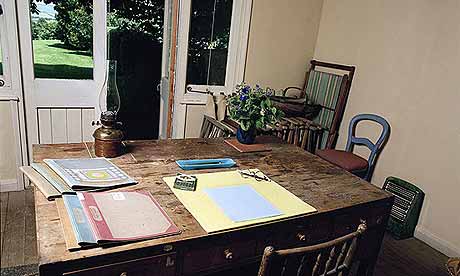
Virginia Woolf's writing room. Drafty but hers. (Photo by Eammon McCabe) See more writers' rooms at http://www.guardian.co.uk/books/series/writersrooms

provided her with the freedom to spend her days with pens and paper. With money her time belonged to her—she answered to no employer, husband or child. She could afford the kingdom most writers require: Four walls and a door that closes. Somewhere. Anywhere.

There were scant great women writers before the time Woolf wrote her essay. If Shakespeare had had a sister, Woolf tells us, she might have been as gifted as her brother (maybe more) but if she had attempted to reject marriage and make her own way in the writing world she would have most likely found herself pregnant and soon after killed herself out of despair and shame. She would not have written.

There are numerous theories about why women did not write: They couldn’t jump on a ship and live a life of action (even though a few did). They had children to tend (a few didn’t). No one would publish a woman. (Who knows how many women writers pretended they weren’t—women that is—and got in to print?) I find Woolf’s argument the most compelling: It’s not how far out you go that makes you a writer; it’s how far inward you journey, because the real dragons you wrestle are within. And for that you need a safe space with padded walls (for some of us), a door that stays shut, and a desk where papers stay where you put them.

My writing room!

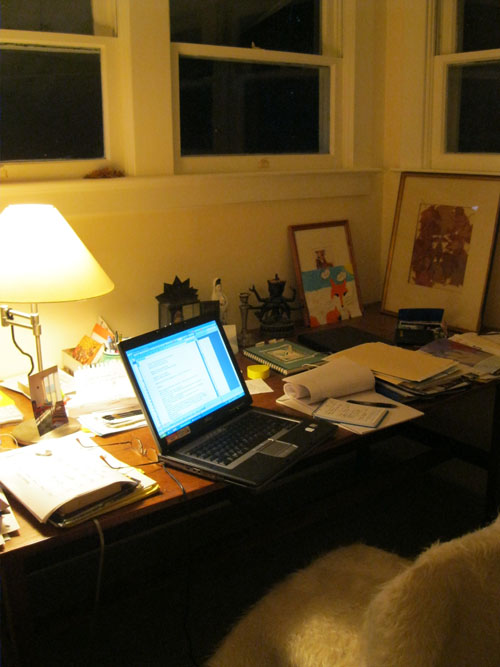
I got my writing room this last year! It took bundling my children together in one bedroom (which they have taken as an excuse for a perpetual slumber party) and embracing a closet as my little piece of heaven. My writing space is the coldest, tiniest room in the house and right off the kitchen, so usually under siege by one child or another.

But I love it. When the carpet I saved up for was put in, my little room became an island of cerulean green. I would not let my kids come inside for the first week. I lay on my new soft floor as if I were ten years old and had been given a tree house. Then I set up my desk like an altar, opened a notebook, lined up my research, and took control of the book I’d been piecing together for years. Sometimes I stared out the windows and watched the squirrels flit along fir trees in the back yard. Mostly I wrote. Like crazy.

In those years before I had “my room” I went off to motels so I could finish a chapter, rented a room facing the ocean in the off season so I could get back inside a character I needed to flesh out, and hid in the corners of coffee shops, where I filled legal pads with some wild and random thoughts and even got some work done. I took precious time and money–my own money, Woolf might point out–for those escapes. I cried driving away from my kids, but still I went, unsure if all that work would come to anything but my needing to try.

Affirmation came last year when I was awarded

The dream of all writing rooms. The cottage assigned to me for the Hedgebrook Residency.

a writers residency at Hedgebrook Farm, which provides women with the ultimate of writing rooms–a cottage all to yourself, complete with gourmet meals, a wrap around desk and a sleeping loft. I cried with gratitude at being given such glorious permission to write and a beautiful place to work on my novel.

While a writing residency strengthened my confidence and certainly helped my book, the greatest gift has been this room (from which I now write) in my own house, an unchanging refuge I can duck into every day as soon as I wake or a sudden window of time opens or when I claim a whole day to work on a new story or revise a section of the novel.

The writing room is a sacred world. Spend enough time inside and the distance you go with your imagination, the words spilling out before you, becomes who you are. Inside you is the room, and you are unlimited. You are like Max in the story The Wild Things, whose “walls became the world all around.” I have hundreds of new pages—stories, poems, and a novel draft that is so far beyond what I had envisioned when I started. Woolf implored those women of the 1920s to write, to find the space and the time and to apply their growing financial power wisely. She admitted “it may be a fantasy” but she’d like to imagine a day when Shakespeare’s sister is brought back to life and gets her due, and the only way to do that is on our pages.

Get a room! For the sake of art. Yours.

You can also give the gift of a writing room to women in Afghanistan. Writing in their homes is often not safe or possible. A new safe space for writers has been established by the Afghan Women Writers Project. It provides a crucial, protected refuge for female authors. (http://awwproject.org).

There’s This Child I Can’t Stop Thinking About

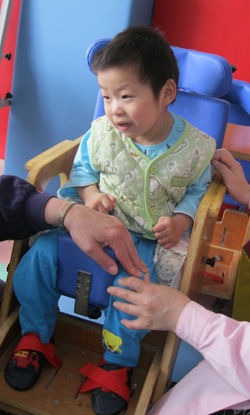
There’s this girl at the orphanage I cannot stop thinking about. She is four years old and afflicted with cerebral palsy so severe that she spends most of her time in a special chair facing windows that give a view of mountains along the Yangtze. She watches, she waits, and when she is approached she smiles radiantly. I have found if I tickle her on her neck she gurgles in delight. Parts of her are locked inside, but to me she is more open than closed, her story still before her. I touch her the way I do my own children, with a desire to stay near to her, with gratitude that she lets me do it.
Everyone I know who visits the orphanage says something like this afterwards: There is this child I cannot stop thinking about.

It could be a boy with one arm who you teach to bounce a ball, a girl with blindness who teaches you how to walk the hallways with your eyes closed, or a newborn with a cleft palate so wide half his face appears at first to be gone. Yet it is his eyes, those of newborns everywhere, that you look into as you hold him on your lap.

I have seen visitors succumb to the immediacy of these children. New fathers, the infants they are adopting in their arms, scan with stricken faces the watching toddlers who will not be adopted that day. New mothers refuse to carry their newly adopted child back inside to where the other children wait. I know what some of those women are thinking: “My child will never go back there.” I know they are afraid they will crack if they see the children in their cribs, in the walkers, especially the ones who will not ever be adopted.

Of course there is more to the story for each and every one of these kids: How they ended up in an orphanage in the first place for one. What are their daily lives like when we are not there? Do aid workers help more than hurt? By focusing on our desire to help do we miss the big picture?

Last time I was in China an influential specialist who works with children with disabilities accused me of that. “You are thinking too small,” he said to me over dinner in the nearby big city when I tried to persuade him to send a member of his team to work out at the orphanage. He was addressing the

The window

needs of hundreds, even thousands of the children in his work, and here I was asking him to give up one of his staff to help kids far out in the countryside, a site not attractive to these young, new professionals. China is dismally understaffed when it comes to doctors and therapists who are trained to work with children with disabilities. I was asking him to devote precious staff time to comparatively fewer kids in need, including that little girl with CP at the orphanage, her face to the window. That one child.

I did not argue with the doctor’s logic. It is not very logical to want to help a child you cannot take home with you, whose needs are so severe. People find reasons to poke fun at other people who go inordinate distances to help another person, especially one like that. If you adopt internationally, someone will inevitably ask why you don’t adopt domestically, as if going the distance to help or expand your family is misguided, even neglectful. It’s a logic born of a kind of practicality I understand. It’s about resources, about “taking care of your own,” about everything except the key to what makes us human:

But there’s this child I cannot stop thinking about.

I have sat beside that little girl and looked where she looked. I have felt her loneliness, have imagined the fear she must have experienced when at two years old she was left at the orphanage gate by someone in her family. It’s not hard to imagine being abandoned because you are not perfect, if you stop and let yourself think about it, if you sit with your arm around someone who has been through it. If you’ve been through it.

Oh I know it’s not up to each of us to save everyone who comes across our path. I have known people crazy enough to do try that and they burn out. Well not all of them. Some manage to give and give more and still feel motivated to act when they see yet another person in pain. Honestly I find those kinds of leaders–because that is what they are—to be frightening. And yet increasingly those are the people I am drawn to.

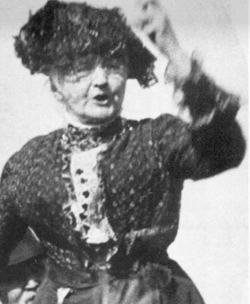
Mother Jones giving one of her fiery speeches.

“Pray for the dead and fight like hell for the living.” I copied this quote into my notebook yesterday, the one I use to take down information for the novel I am working on. These words were said by Mother Jones, a tiny woman who stood up for the rights of coal miners in the early 20th century. She wasn’t a coal miner. She had lost her husband and four children to yellow fever. Yet years later she became a union agitator who risked being a fool and the wrath of big coal companies to fight for the men and their families who were suffering.

It was about justice for her. Maybe not at first. Maybe it was simply a desire to speak on behalf of someone who could not speak or wasn’t being heard, someone who captured her attention. Maybe she didn’t have much to lose by then: her children were all dead, and she was living in poverty herself.

But there’s always something to lose once you start caring: Sleep, time, money, people’s good opinion of you, failure, anger from people who don’t want you to speak. You can risk being a fool.

Being held by her special caregiver. A small donation will help pay for this little girl to continue to receive this kind of love.

I’m going to do it anyway, take that risk. Because of this one child I can’t stop thinking of, this girl no one will adopt. Because I believe that this little girl is worth a $20 donation from people who don’t know her. Because when she’s not looking at the window she’s watching the other children run about her. It doesn’t take much for anyone who sees her to imagine that this little girl wants to play too.

Please give, and by December 31st, so she can keep getting the special one-on-one attention from local caregivers throughout the coming year. These caregivers are being trained to help her and other struggling children at the orphanage to grow stronger and move beyond the most suffocating parts of their disabilities. http://fulingkids.org

I promise I’ll tickle her neck for you when I see her this coming summer.

With Gratitude,
Kathlene

What I’ve Learned Mentoring Afghan Women Writers

Women writers in Afghan speak through Afghan Women Writers project. http://awwproject.org

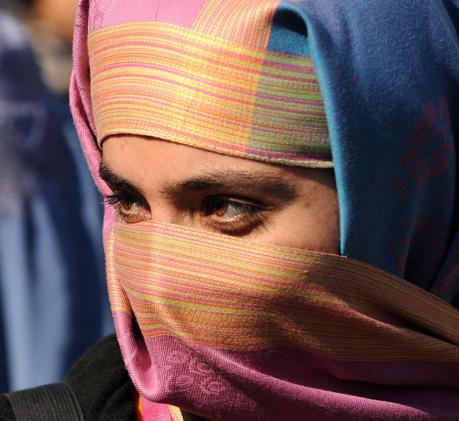
I went in to this rare opportunity to mentor women writers in Afghanistan with some nervousness. What could I offer women under such stress? These are women who the newspapers tell us cannot leave their homes unattended by a male relative, who are for all intents and purposes ghosts in burqas. Their schools are gassed by militants who don’t believe a girl should get an education. Their villages are sometimes bombed by our own military. They have lost too many of those they love.

Their stories and poems came to me in my email box, bit by bit, draft by draft, often with a thank you to me for my critique. Some of the pieces were so painful to read I had to go for a walk before I could answer. How to approach revision? Every word seemed precious. I finally took a deep breath and worked slowly through each piece. While offering suggestions I felt for the heart of what each writer was trying to say in English, a language that is not her first and in some cases second and even third.

What I had not anticipated was the writers’ often wry delivery of ironic moments in every day life. Some of writing they shared with me and the other women in the online class was so optimistic and humorous I smiled and imagined the face of the writer, what it would be like for all of us to sit together sharing our work and laughter. It seemed easiest if I could envision a table much like where I sit with my writing groups or with my students in the US, a place where the writing and being together is the most important thing. For short periods of time we shut the door on what we cannot control to focus on what needs to be said and said well.

What is the number one thing these women writers want? An education. For many that opportunity exploded, literally, when first Soviet and then later US forces moved into their country. They fled from war into Pakistan. Some of them kept going to school as refugees in Pakistan, but it was a cobbled together education. When they could return to Afghanistan, they had much to make up. There were not enough schools for girls and it was often dangerous to go.

One of the biggest obstacles to learning can be found in their homes. The women write about trying to persuade their fathers to let them go to school. In many cases they have to convince their brothers, husbands, uncles and even their mothers. They write with affection of fathers who saw in their daughters the dream to learn and sacrificed so they could go to good high schools and even—the dream of all dreams–to study abroad. They write of losing their fathers to opium addiction, torture and murder by the Taliban and of fathers who have died in the war. Without fathers they cannot afford to go to school. They face extreme poverty and arranged marriages that close the door on the possibility of college. These women remind me how a father can make or break a girl’s future, of the profound responsibility a man bears to do right by his daughters by supporting and respecting them.

I had not–but should have–anticipated the intense courage of these women, how hard they are fighting for their futures and the sheer force of their will to not only survive but succeed and change the face of Afghanistan.

Visit awpproject.org and open one of these writers’ stories or poems. Imagine these women are at your table or you are at theirs. Listen and answer.

Many of us stand helpless in the face of this war and can only watch while others pay a profound personal price. We see women around the world who suffer brutally for no other reason than they were born female, and we feel we can do nothing.

But we can read. We can respond through the Afghan Women Writers Project website. Anyone can open the stories by Roya, Sofia, Ellaha and the other brave writers. Anyone can tell them to please keep writing.

AWWP has made me hope we can create a conversation that crosses over this vast killing divide and the misunderstandings that are costing lives and livelihoods. We can connect as writers to writers and people to people. This is the kind of dialogue many of us know is the answer.

——-
Masha Hamilton, founder of the Afghan Women Writers Project, an award winning novelist and journalist, will be a visiting writer and guest speaker at Pacific University on March 3, 2011. I have so many questions for her when she is here!

Bed Books, or What I Like to Do Under the Covers

I spend a lot of time in bed. Not as much as I used to, but I have a bad habit of slinking away from family gatherings to meet up with a book that waits for me on the blankets, splayed open to where the two of us last left off. It used to be any book. I had no sense and no self control.

Tenth grade, for example, was Gone with the Wind. I crawled into my bed with that behemoth on a Monday after school. I read for 26 hours straight, skipped classes the next day and every meal. (When I told my mother I was sick, she believed me. I certainly looked afflicted.) I absorbed the whole civil war, reconstruction and Scarlett’s obliteration of Rhett’s love in one binge. I nodded off at times like a soldier on a watch, jerking awake to turn a page, hoping Scarlett would relent before it was too late.

I was so deliciously depressed at the end of that novel I spent another whole day with a blanket over my head recovering.

After that I welcomed Holden Caulfield into my bed, then Becky Sharpe and later, much later than most girls, Jane Eyre and Mr. Rochester.

By the time I got to Jane Austen I was in college, and I knew within the first two paragraphs of Emma I had found the ultimate bed writer. These were tales of repressed love and dreams delayed until the last minute. Sisters in Austen whisper in bed, pushed together for warmth. Mothers take to their couches. Females everywhere hang suspended, waiting and dreaming. It’s pathetic and wonderful.

I met a young diva of bed reading during graduate school. A consumer of Tolstoy and Dostoevsky, she lay prone on her mammoth duvet and tumble of pillows, her shade drawn, gone so far into Anna Karenina or Crime and Punishment that she might as well be dead to the world. It was maddening and impressive–how disheveled her state, how rude she could be if interrupted. She became a professor of Russian literature. I imagine she has slept her way across Russia back and forth by now.

What is it to sleep with a book? Not as comfortable as you would think. The pillows are never the right softness, the sheets inevitably twisted. I usually have to pee during the good parts. My hands are cold in the winter. The truth is I never sleep well for all that time on the mattress, but I still can’t lie down without a book within reach.

I have tried to break the habit over the years, or at the least to limit the time I am allowed to read in bed. Healthy people run or take up rowing or tennis. When they go to bed with a book they nod off in five minutes. But once a bed reader always a bed reader, I guess.

I do rule out some books now. No Stephen King or the like in bed. No nonfiction about war or human rights or illness. Those I must take sitting up, preferably at a table, because they are meant to wake one from the dream. Recently I made the mistake of reading in bed a devastatingly good essay on cancer and end of life decisions by Atul Gawande. It was after midnight when I finished, and I suffered for it that night and several after. There was no pleasure in what I learned, but the information may change for the better my life and the lives of those I love.

A word about reading poetry in bed, because I’ve tried, seduced by the images and music. The problem with poetry is that some of the lines are so exciting I have to read them aloud to my husband, who often lies beside me doing the crossword puzzle. A “wordie” himself, he’ll pause to listen and even hang with me for a stanza or two. Then it will occur to him that a woman is under the blankets reading poetry to him. Like any sensible man he tosses the crossword and my book on to the floor and moves on to other things.

I might as well be reading erotica when it comes to poetry in bed. But that’s for a whole ‘nother blog entry.

My favorite authors to have between the sheets these days are Louise Erdrich and Alice Munro, not only because their short fiction is simply brilliant but because stories are the most mature of bed reading. You can consume three or four and still get in eight hours of sleep before morning.

Recently, however, I fell off the wagon. Or more precisely I fell into bed with The Lonely Polygamist, Brady Udall’s 599 page novel about a man with too much. I felt again the overwhelming hunger for a book not good for me, the gnawing angst of frustrated love, the ravenous impulse to hang too close to a character driven by his own dissatisfaction. I let myself travel deep into the core of someone else’s life. I was ruined for days afterwards. But I felt alive, too, because I had discovered another book that could take me that far.

My oldest daughter, not yet 11, shows signs of the same affliction: The addictive reading after lights out, the covert sliding of the book down her bed to the exact spot where the slice of light comes in from the hallway. In the morning she hunches over her cereal, eyes inflamed, spacey and gone. I always want to say to her, “Oh, Honey, you are in for it now. The curse of the floating life.”

Emily Bronte wrote, “I’ve dreamt in my life dreams that have stayed with me ever after, and changed my ideas; they’ve gone through and through me like wine through water, and altered the colour of my mind.”

You just know that when Emily wasn’t walking the moors with her gun or writing at the dining table with her sisters, she lay in bed, reading.

Summer of 19 Books

Irene was an undisciplined reader and kept a mess of half-read books beside her bed, as well as on the coffee tables and in the bathrooms…She was a raucous, impertinent even disrespectful reader.”–Louise Erdrich, Shadow Tag

My selection criteria for this summer’s reading was “scientific”: Books by writers I’ve met and admire as people and artists. Books I found standing in the stacks at Powell’s. Books that help me as I write my own book. Books my husband saw at the library, thought I’d like, and brought home for me (because he’s just that kind of guy). These are listed in no particular order–kind of how they are piled beside my bed.

Shadow Tag (novel) by Louise Erdrich. I’ll read anything by Erdrich the minute it comes into my hands, even if it means I’ll be up all night. This spare, tense mystery has fewer of the flourishes and expansive timelines of her larger novels, but it drives at a faster, more perilous speed. It makes the questions she’s posing about living an authentic life hit harder. Every page brings a surprise.

Persian Girls (memoir) by Nahid Rachlin. Finished this one last night with my heart in my stomach. Nahid shared excerpts of her book on a recent visit to Pacific U. I was drawn into her thoughtful way of talking about how she writes and her desire with this memoir to vindicate her sister, who died a young woman in Iran. Nahid opens a window on girlhood in Iran and what is lost and gained by choosing to leave.

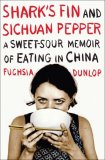
Shark’s Fin and Sichuan Pepper, a Sweet and Sour Memoir of Eating in China by Fuschia Dunlop. Recommended by fearless friend Betty, who lived in Chengdu when I did and loves food the way poets love poetry. Honest and delicious memoir.

Crying Tree (novel) by Naseem Rahka. I had the opportunity to read and respond to some of this book in early draft form. Naseem asks just how far compassion can go. Could you forgive someone who killed your child? I admire her courage to write a novel like this and her tight pacing and craft.

Dawn Light by Diane Ackerman. Early morning mediations with the trademark Ackerman layers of history, science and beauty. I’m halfway through and my mornings are better for it–and my own writing, too. Don’t want it to end.

The Real Story of Ah Q and Other Tales: The Complete Fiction of Lu Xun. I bought this in Chengdu in June at the beautiful independent bookstore there and fell in love with this new translation. He’s still one of China’s favorite authors and with good reason.

Torch (novel) by Cheryl Strayed. Discovered this at Powell’s. First chapter in and I’m awed by the way Strayed pays attention to how people are together. I’m also scared to keep reading because I can see she’s going to break my heart six ways from Sunday.

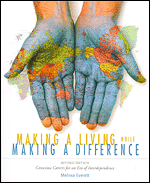
Making a Living While Making a Difference by Melissa Everett. How to be a social entrepreneur? How to help others and the planet and make enough to live on as well? I’m sold. I’m reading this for my students as much as for myself.

The Lonely Polygamist (novel) by Brady Udall. I shelled out the dough for this pricey hardcover at Powell’s because I was sick of writers I know telling me this was the best book ever. I read it in two days. It is the best book, ever. I laughed like a hyena during the first chapter and felt tears of sadness seeping out of my eyes midway. Even better: Reading it helped me fix a problem in the opening of the book I’m writing. My husband is reading this book right now, because I told him it is the best book, ever.

Crazy Love (stories) by Leslie What. Written by one of the most unpredictable women I know. These are funny, wild, weird stories that make me look at other people and wonder what they are up to. Opening sentence of one story: “It was that time of the month again when Agatha was about to go animal and there wasn’t a damn thing Helen could do, except wait for it to be over.”

The Happiness Project (nonfiction) by Gretchen Rubin. I don’t know if I picked this book because of the content or because it was a number one bestseller, which must make Rubin very happy. I’m reading it so I can get happy, too. Hope it works.

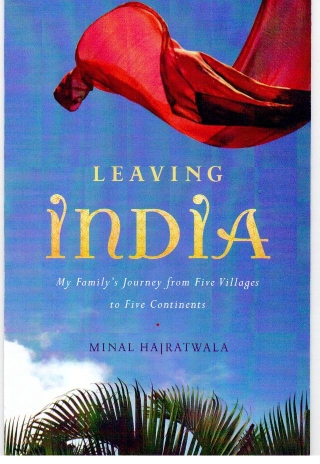
Leaving India (nonfiction) by Minal Hajratwala. I got to be part of deep, interesting conversations with Minal at the Hedgebrook Residency on Whidbey Island in Washington before I got my hands on this book. Minal is an expansive thinker, artist and overall fine person to have in this world. She makes me want to be a better person and accept myself for who I am at the same time. This wise book is like her.

Half the Sky (nonfiction) by Nicholas Kristoff and Sheryl Wudunn. Kristoff and Wudunn argue that sex trafficking and poor maternal health are the international moral issues we need to confront. Dark stuff, except their “can do” attitude is reinforced effectively with case after case of women leaders who have pulled themselves out of these pits of despair in order to help others. And, yes, you can donate.

Lake Effect: Two Sisters and a Town’s Toxic Legacy (nonfiction) by Nancy Nichols. A journalist speaks out about the death of her sister from what she argues–very convincingly–was environmentally induced cancer. I read this with a combination of panic and gratitude as a Michigan girl who loves the lakes and grew up in a factory part of town.

Seven Taoist Masters, A Folk Novel of China, by Anonymous and translated by Eva Wong. Found this in the excellent fiction section of my local Goodwill and am wowed by the personality of this story and its glimpse into ancient China. What is necessary to reach enlightenment? It aint easy. I like the down to earth struggles and questions of these 6 guys and 1 woman. The biggest question and hardest to answer: What is compassion?

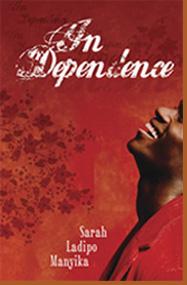
In Dependence (novel) by Sarah Ladipo Manyika. An international love story written by one of the most vibrant writers and thinkers I know. It was exciting to be included in Sarah’s creative process during the residency at Hedgebrook. Her brainstorming sessions were inspired and inspiring.

My Best Stories by Alice Munro. I read these one each night before I go to sleep. It’s a thick book, and I get a charge out of knowing Munro made these selections herself. My hope is that while I sleep the rhythm of her sentences will root into my brain and show up in my own writing the next morning.

Camel Bookmobile (novel) by Masha Hamilton. Can you turn a real altruistic effort–in this case a nonprofit to bring books to readers in villages in remote Africa–into a novel? I’m fascinated with how Hamilton shapes this story.

Tales from Ovid translated by Ted Hughes. Stories in poems. Everyone and everything in these stories transforms; each line is an elegant reminder of the devastation required in any metamorphosis. Male gods pursue and bring down female after female. Rather than be destroyed, these women and goddesses free themselves by shedding their bodies to become trees, water and other forms too expansive to be imprisoned or defined. I’m hooked.